Chinese New Year Scroll Color Line
A Designer’s First Look: Graceful, Not Gaudy
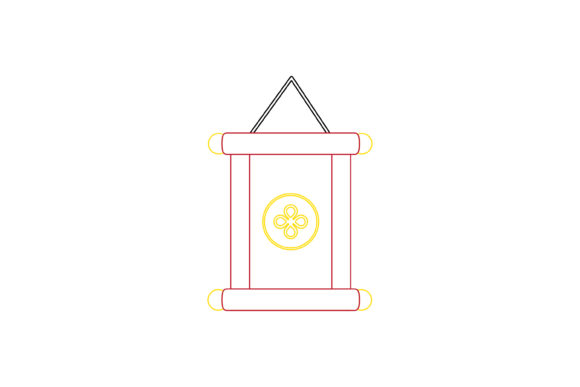
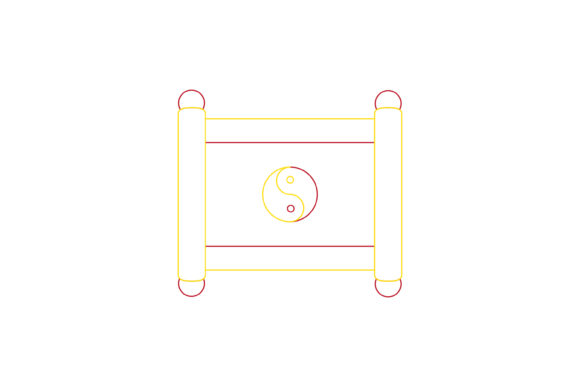
When I opened Chinese New Year Scroll Color Line for the first time, I didn’t see clutter—I saw rhythm. The scroll unfurls with quiet confidence: balanced curves, subtle weight distribution, and a clean line that breathes. It’s not overloaded with ornamental flourishes, yet it carries unmistakable cultural resonance—red accents suggest auspiciousness without shouting, and the calligraphic flow feels intentional, not algorithmic. As an embroidery designer who’s stitched hundreds of holiday motifs, I immediately thought: *This won’t fight the fabric. It’ll complement it.*
Real Project Test: A Custom Embroidered Tote for Lunar New Year Pop-Ups
Last week, I prepped a small batch of linen tote bags for a local boutique’s Lunar New Year launch—hand-stitched labels, custom tags, and one central motif per bag. I chose Chinese New Year Scroll Color Line as the hero design. Why? Because it scales beautifully from 3” wide (on a petite apron pocket) to 7” wide (centered on a sweatshirt chest), and its open-line structure translates cleanly into satin stitch outlines and light fill areas—not dense, heavy embroidery that stiffens lightweight fabric.
On the tote, it stitched crisply at 4.5” wide using medium-weight cutaway stabilizer. The curved ends flowed smoothly across the slightly textured linen; no puckering, no skipped stitches. Customers loved how “elegant but approachable” it felt—neither too traditional nor too trendy. That balance is rare in holiday icons, especially in the Icons category where many designs sacrifice legibility for ornamentation.
Where It Shines (and Where It Needs Thought)
Chinese New Year Scroll Color Line excels in projects where clarity and craftsmanship matter more than flash:
- Custom apparel: Works well on sweatshirts, baby onesies, and unisex tees—especially when paired with minimalist branding or monogrammed initials.
- Embroidered patches: Its clean outer contour makes it ideal for sew-on or iron-on patches—no tiny interior details to vanish under backing.
- Holiday gifts & nursery decor: Softens the visual weight of festive themes—perfect for tea towels, pillow covers, or quilt blocks where subtlety reads as care.
- Digital product previews: As a Graphics asset, it holds up in printable mockups and Etsy listing thumbnails—even at small sizes, the scroll’s silhouette remains recognizable.
But—and this matters—it’s not universally forgiving. On stretchy knits or thin voile, I’d reduce density manually or add a light tear-away + topping combo. On dark fabric, test thread contrast early: red-on-black reads richly, but gold or peach tones may need brighter top threads. And avoid placing it near seams or curved surfaces like cap fronts unless you’ve verified hoop clearance—the scroll’s gentle taper can get distorted if forced into tight arcs.
What It Adds to Your Finished Product
This isn’t just decoration. Chinese New Year Scroll Color Line quietly elevates perceived value. When stitched on a handmade kitchen towel, it signals intention—not just “holiday-themed,” but *thoughtfully made*. For Etsy sellers, that nuance builds trust: buyers recognize craftsmanship in the spacing between strokes, the evenness of line weight, and how gracefully it integrates with other elements (like a small fortune cookie icon or your shop’s logo).
It also supports brand consistency. Unlike busy clipart-style icons, this design leaves room for your voice—whether you’re a modern craft studio, a heritage textile shop, or a bilingual family business. It doesn’t dominate; it invites. That’s vital for personalized gifts and boutique merchandise where the recipient should feel seen, not sold to.
Practical Notes Every Embroidery Designer Should Check
Before stitching your first Chinese New Year Scroll Color Line project, do these five things:
- Test on scrap fabric—same type, same stabilizer, same thread count—as your final piece. Watch how corners land and whether fine lines hold.
- Review stitch density in your embroidery software. If it’s a vector-based machine embroidery design, confirm whether fill areas are optimized for breathable wear (not solid blocks).
- Confirm hoop size compatibility. Its longest dimension dictates minimum hoop clearance—especially important for caps, sleeves, or narrow apron straps.
- Inspect small details at actual stitch size: tiny scrolls or tapered ends shouldn’t collapse into mush. If they do, simplify manually before stitching.
- Check licensing for commercial use—especially if you plan to sell finished products or offer it as part of a digital embroidery file bundle. Since it’s labeled suitable for logos and t-shirt designs, verify scope before scaling for client work or craft fair inventory.
Final Thought: A Design That Respects the Craft
As someone who’s rejected dozens of “festive” embroidery files for being too literal, too pixelated, or too dense, I appreciate how Chinese New Year Scroll Color Line trusts the process. It assumes you’ll choose thoughtful thread colors, stabilize intentionally, and place it where it enhances—not overpowers. It’s not a shortcut. It’s a collaborator.
Whether you’re stitching baby embroidery for a newborn’s first Lunar New Year, designing a limited-run embroidered patch for your craft business, or building a cohesive holiday collection for your small shop product line—this scroll earns its place. Not because it’s flashy, but because it’s faithful: to tradition, to texture, and to the quiet pride of making something by hand.