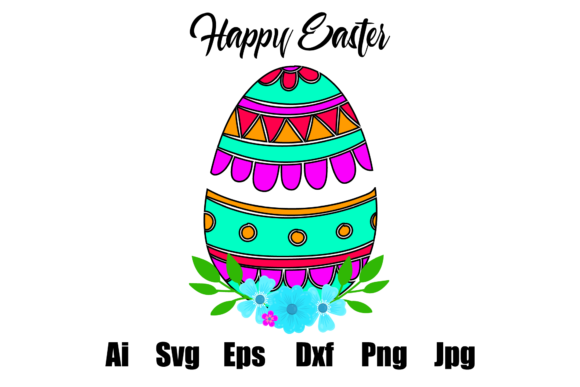
Easter Egg – Full Color Flower
A Designer’s First Look: Cheerful, Balanced, and Ready for Spring
When I opened Easter Egg – Full Color Flower for the first time, my eye went straight to the harmony between shape and detail. It’s not just an egg—it’s a soft, rounded canvas wrapped in layered florals: daisies, forget-me-nots, and subtle sprigs that bloom outward with gentle rhythm. The full-color palette feels fresh but grounded—no neon overload, no muddy tones—just clear, friendly hues that translate well across thread brands. As an embroidery designer who’s stitched hundreds of holiday motifs, I immediately pictured this on a linen tea towel, a cotton baby onesie, or the front panel of a woven tote. It carries warmth without saccharine sweetness—a rare balance for seasonal graphics.
Where This Design Truly Shines in Real Projects
I tested Easter Egg – Full Color Flower as the centerpiece for a small-batch embroidered tote bag line—intended for local craft fairs and boutique consignment. The 1920px × 1280px canvas gave me room to scale thoughtfully: at 4.5" wide, it filled the tote’s front pocket area cleanly without crowding seams or distorting stitch flow. On medium-weight cotton twill, the design held crisp satin-stitched petals and smooth fill-stitched centers. Customers responded strongly—not just to the Easter theme, but to how “handmade” it felt, even though it was machine-embroidered. That’s the quiet strength of this piece: it reads as intentional, not generic.
It also worked beautifully on a lightweight sweatshirt (cotton-poly blend), especially when paired with a light stabilizer and reduced stitch density in the outer floral loops. For baby embroidery, I resized it down to 3" and used soft pastel threads—no skipped stitches, no puckering. And yes, it translated well into an embroidered patch: clean edges, distinct petal separation, and enough breathing room between elements to avoid thread nesting.
Where to Pause—and Why
This isn’t a one-size-fits-all motif. On highly textured fabrics like bouclé or thick terry cloth, some of the finer inner details softened noticeably—so if you’re planning nursery blankets or plush pillows, test those delicate stems and stamen lines on scrap first. Similarly, on stretchy knits (think baby bodysuits or ribbed caps), the outer curve of the egg can distort unless hooped with firm cutaway stabilizer and stitched with a slower speed.
Dark fabric backgrounds demand attention too. While the design includes rich mid-tones, the palest flower centers and thin vine accents risk fading visually without careful thread selection—especially in satin stitch areas where sheen can mute contrast. And on curved surfaces like structured caps? Keep the hoop size generous and avoid placing the topmost blossom directly over the crown seam—those tight curves compress stitch spacing and blur fine lines.
Design Assets That Support Your Craft Business
What makes Easter Egg – Full Color Flower stand out among Illustrations and Graphics is its versatility as a digital embroidery file *and* a visual asset. The AI, EPS, SVG, and DXF files let me adapt it beyond stitching: I used the SVG to build printable mockups for my Etsy listings, and the AI file helped me tweak color palettes for seasonal bundles (think lavender + sage for Easter brunch gifts). As a small shop product, it adds instant cohesion—pair it with coordinating kitchen towels, aprons, and pillow covers, and customers recognize your brand’s thoughtful curation.
For Etsy sellers and handmade product makers, this design supports trust. Its clarity says “professionally crafted,” not “clip art.” When buyers see consistent stitch definition across your embroidered patches or sweatshirt embroidery, they associate your shop with care—not just speed. That perception lifts perceived value, repeat orders, and word-of-mouth referrals.
Practical Embroidery Designer Notes You’ll Actually Use
- Always test first: Run a sample on your target fabric—even if it’s the same type you’ve used before. Thread tension shifts with humidity, needle wear, and batch variations.
- Check thread color contrast: Print a black-and-white version of the design to spot low-contrast zones (like pale yellow petals on cream fabric) before stitching.
- Review stitch density: Dense fill areas near the egg’s base may need slight reduction for breathable fabrics like gauze or lightweight linen.
- Confirm hoop size early: The original canvas allows comfortable scaling, but don’t assume your smallest hoop will handle the full layout at 100%.
- Inspect small details: Zoom in on the EPS or AI file—look for overlapping paths or stray anchor points that could cause jump stitches or trimming issues.
- Test light vs. dark backgrounds: Stitch two versions—one on white cotton, one on navy denim—to gauge how much thread pop you’ll get from each hue.
- Use proper stabilizer: Medium-weight tear-away works for most cottons; switch to cutaway for knits or anything that will be washed frequently.
- Verify licensing: Since this is sold as a Graphics digital embroidery file, confirm whether commercial use (e.g., selling finished embroidered totes) is permitted before launching a product line.
Final Thought: A Thoughtful Addition to Your Design Toolkit
Easter Egg – Full Color Flower isn’t flashy—but it’s reliable, expressive, and quietly sophisticated. It doesn’t shout “Easter!” It invites. Whether you’re building a cohesive holiday embroidery project for a boutique client, prepping personalized gifts for a church bazaar, or expanding your craft business with seasonal design assets, this piece earns its place in your library. It stitches cleanly, scales gracefully, and carries the kind of visual warmth that makes handmade products feel personal—not mass-produced. In a market crowded with overdesigned motifs, sometimes the most effective embroidery file is the one that simply feels like spring.