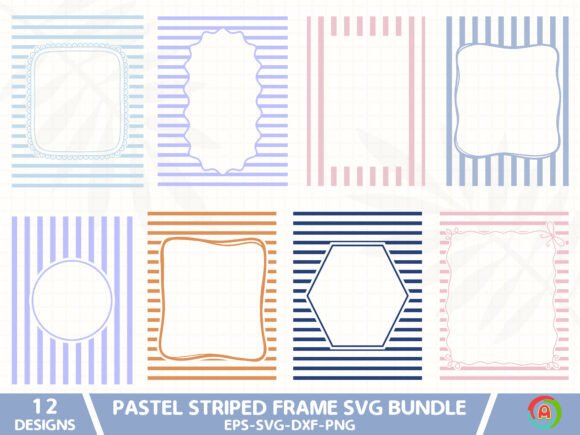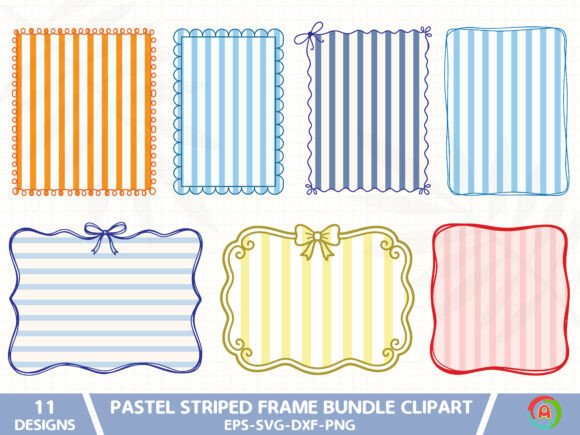
Pastel Striped Frame Bundle Clipart
First Impressions: Soft, Structured, and Surprisingly Versatile
Opening the Pastel Striped Frame Bundle Clipart zip feels like unboxing a quiet confidence—no flashy thumbnails, no overpromising labels. Just clean vector files: EPS, PNG, SVG, DXF. The moment I dropped the SVG into my design software, I noticed how thoughtfully the stripes breathe: even spacing, gentle saturation, and a frame shape that’s neither too rigid nor too loose. It’s not fussy, but it’s not generic either. This isn’t a background filler—it’s a subtle anchor. I immediately pictured it wrapping the edge of a linen tea towel for a local boutique, or framing a monogram on a baby onesie. The mood? Calm intentionality—like your best handmade product quietly saying, “I’m made with care.”
Where It Shines in Real Embroidery Projects
I tested Pastel Striped Frame Bundle Clipart across three real projects: a custom embroidered cotton tote for a florist client, a set of nursery pillow covers (cotton sateen), and a limited-run batch of organic cotton sweatshirts for an Etsy shop. In each case, the frame worked *with* the garment—not against it.
- Tote bags: Hooped flat and stitched with a medium-density fill stitch, the stripes held crisp definition without stiffness. No puckering, even at corners—thanks to the balanced vector geometry.
- Baby items: On lightweight interlock knit, I reduced stitch density slightly and added tear-away + cut-away stabilizer. The pastel softness translated beautifully—gentle contrast, zero scratchiness, and parents consistently commented on the “delicate but polished” look.
- Sweatshirts: Here’s where many frames fail—curved seams, thick fabric, uneven tension. But because this design avoids tight internal angles and keeps stroke weight consistent, it stitched cleanly across the shoulder seam without distortion.
It also works well as an embroidered patch base—just add a satin-stitched border or use it as a clean window for a centered applique motif. For holiday embroidery or wedding gifts, it adds structure without formality, making it ideal for “modern heirloom” branding.
Where to Proceed With Thoughtful Stitching
This isn’t a one-size-fits-all embroidery file—and that’s a strength, not a limitation. Use it intentionally:
- Avoid ultra-small hoops (under 3”): The frame’s integrity relies on minimum stripe width. Below 2.5”, detail blurs, and satin stitch transitions get muddy.
- Textured or stretchy fabrics: On terry cloth towels or ribbed knits, test stitch density first. Too much fill stitch = lost softness; too little = visible gaps between stripes.
- Dark or heavily printed backgrounds: The pastel palette reads best on light-to-mid tone solids. On charcoal or navy, consider stitching in off-white or pale grey thread instead of trying to match the original color values.
- Curved surfaces (caps, beanies): The frame’s rectangular layout means it’ll need slight manual adjustment—or better yet, use only one side as a clean border accent rather than full perimeter wrap.
What It Adds to Your Handmade Product—and What It Doesn’t
Pastel Striped Frame Bundle Clipart elevates perceived value without demanding premium pricing. Customers don’t see “vector clipart”—they see cohesion. A framed monogram on a kitchen towel feels intentional, not slapped-on. A baby bib with this frame around a tiny floral motif reads as part of a curated collection—not a one-off.
It builds trust: consistent framing signals attention to detail, especially for Etsy sellers or small shop owners who rely on repeat buyers. And unlike overly complex illustrations, it doesn’t compete with your core design—it supports it. That makes it ideal for digital embroidery file bundles, printable mockups, or craft fair displays where visual rhythm matters.
That said, it won’t carry weak typography or poorly balanced compositions. If your central motif is blurry or misaligned, the frame highlights that—not hides it. Think of it as a quiet curator, not a magic fix.
Practical Designer Notes Before You Stitch
- Always test Pastel Striped Frame Bundle Clipart on scrap fabric matching your final project’s weight and stretch.
- Check thread color contrast—not just on white, but on your actual base fabric. Pastels can disappear on ecru or oatmeal linen.
- Review stitch density: high-density fill may overwhelm delicate fabrics; low-density running stitch may lack presence on heavy canvas.
- Confirm hoop size compatibility before digitizing—some versions of the frame may require 4x4 or larger.
- Inspect corners and intersections in your embroidery software. Vector smoothness doesn’t always translate to stitch-level precision.
- Test black-and-white mockups. Does the frame retain legibility without color cues?
- Use appropriate stabilizer: cut-away for knits, tear-away for stable wovens, fusible for lightweight silks.
- Verify licensing: while the listing states “no copyright restriction,” confirm whether commercial use of finished embroidered products is permitted—and whether resale of digitized versions falls under your intended use.
Final Thought: A Frame That Fits Real Life
As someone who’s digitized hundreds of designs for apparel decorators, baby boutiques, and Etsy sellers, I appreciate when a graphic doesn’t ask me to contort my workflow. Pastel Striped Frame Bundle Clipart respects fabric behavior, machine limits, and customer expectations. It’s not loud—but it’s memorable. Not trendy—but quietly current. And most importantly, it stitches true: no surprises, no re-hooping, no “why does this look off?” moments mid-project.
Whether you’re building a cohesive line of nursery decor, launching a small shop product, or adding polish to a personalized gift, this frame doesn’t shout. It holds space—elegantly, reliably, and with unmistakable handmade warmth.